Skip to content

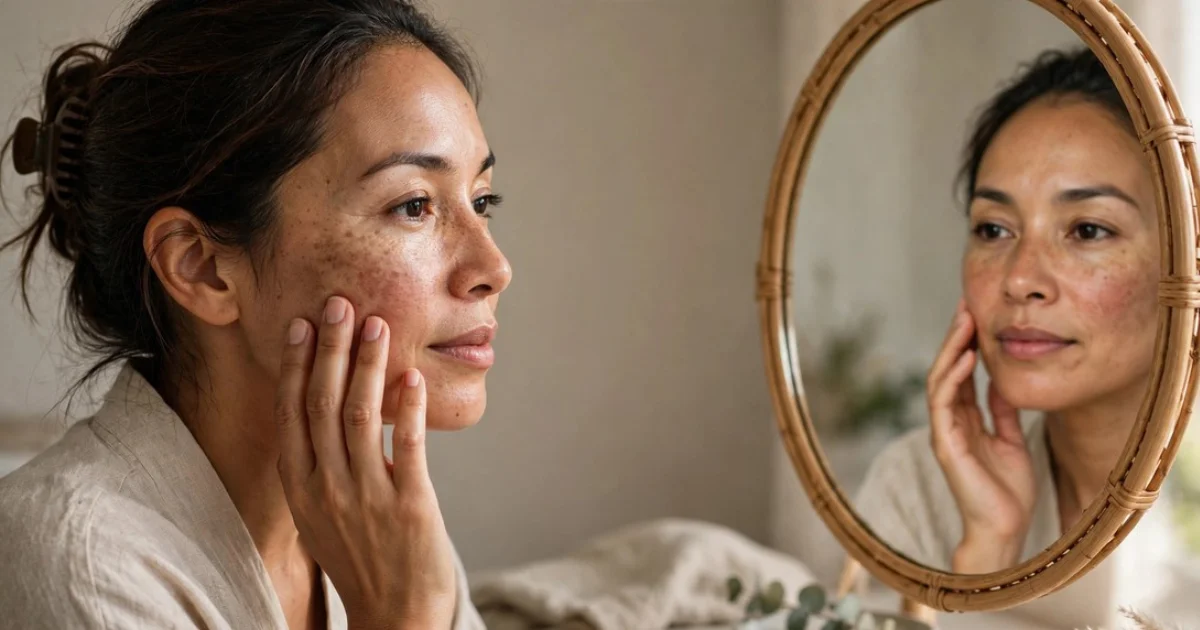
Sun spots rarely show up overnight. They build quietly across years of Texas sunlight, then seem to appear all at once in a photo or in morning light by the bathroom window. At Serenity Hill Aesthetics, we hear about this concern more than almost any other, and a Lumecca IPL treatment is one of the most direct answers we offer for it.
Lumecca™ is an intense pulsed light device built to address pigment and redness in the skin. Below is what causes the spots in the first place, why topical products stall out, and how light-based treatment works on pigment that has already settled in.
How does Lumecca IPL reduce sun spots?
Lumecca IPL sends broad-spectrum light into the skin, where concentrated pigment absorbs the energy and breaks apart into smaller particles. Those particles rise toward the surface and shed over the following week or two, so individual spots fade, and the overall tone looks more even.
Why Sun Spots Show Up in the First Place
Sun spots form when repeated UV exposure pushes melanocytes, the pigment-producing cells in your skin, to overproduce in concentrated patches instead of evenly. They are different from post-inflammatory hyperpigmentation, the marks left behind after a breakout heals, and different again from melasma, which is influenced by hormones and tends to be more stubborn.
Spots surface first on the face, chest, shoulders, hands, and forearms because those areas collect the most light over a lifetime. North Texas adds its own pattern. Long drives and open-sky weekends mean plenty of exposure through glass, and windshields filter UVB while letting UVA through, so left-side and hand pigmentation is a familiar sight here.
Why Uneven Skin Tone Is a Separate Problem From a Single Spot
Uneven tone is a blend rather than a single mark. Diffuse pigment, background redness from small surface vessels, and slight texture irregularity all read together as patchiness, which is why skin can look dull and blotchy without any one spot standing out.
Makeup handles this for a few hours at a time, then stops. Color correctors sit on top of pigment that remains exactly where it was, so most people find themselves applying more product each year while the underlying tone keeps drifting.
Why Sunscreen and Brightening Products Only Take You So Far
Sunscreen and antioxidants are preventive. They slow the formation of new pigment, but they do not remove pigment already deposited in the skin. Daily SPF remains the single best habit for protecting your complexion, and it will not clear a spot that has been there since your twenties.
Topical brighteners can lighten newer, shallower discoloration over several months, then usually plateau on older and deeper deposits. At-home care maintains, while in-office sun damage correction does the heavier work.
How Lumecca IPL Targets Pigment
A Lumecca IPL treatment delivers a broad band of light into the skin, where melanin absorbs it far more readily than surrounding tissue does. That selective absorption concentrates heat in the pigment itself and leaves nearby skin largely undisturbed, which is how a pigmentation reduction treatment can lighten a spot without resurfacing everything around it.
The same light is absorbed by hemoglobin in small surface vessels, so background redness often softens alongside the spots, making intense pulsed light therapy useful as a vascular lesion treatment as well. Lumecca is FDA-cleared for the treatment of benign pigmented and vascular lesions.
What Happens to a Sun Spot After Treatment
Treated spots typically darken before they lighten. Within a few days, pigment often looks sharper and more defined, sometimes described as a coffee-ground appearance, which indicates the pigment is fragmenting and moving upward rather than a sign something went wrong.
Over roughly one to two weeks, that pigment lifts and flakes away with normal skin turnover. Diffuse unevenness improves more gradually across a series. Aftercare is simple: daily sun protection, gentle cleansing, and leaving flaking areas alone instead of scrubbing or picking at them.
How Many Sessions Most Patients Need for Even Tone
Isolated sun spots often respond noticeably after a single session. Broad unevenness across the face, chest, or hands usually calls for a short series, commonly three to five appointments spaced several weeks apart so the skin has time to clear fragmented pigment between visits.
Depth, age, and density of pigment all influence how quickly things change, and results vary from person to person. Because UV exposure continues after treatment, most patients keep their results with occasional maintenance sessions and consistent daily sunscreen.
Who Lumecca IPL Is Best Suited For
Skin tone improvement therapy with light works best on UV-driven spots and diffuse discoloration in lighter Fitzpatrick skin types, generally I through IV. Deeper skin tones absorb light differently and carry a higher risk of unwanted pigment change, so a provider assesses skin type before treating and may recommend a different approach.
Melasma behaves unpredictably with light-based treatment and often needs its own plan. A few situations also call for rescheduling or an alternative, including recent sun exposure or tanning, active infection in the treatment area, pregnancy, photosensitizing medications, and recent isotretinoin use. For patients considering Lumecca IPL in Wichita Falls, TX, that assessment happens at consultation.
Common Questions About Lumecca IPL for Sun Spots
Does it hurt?
Most patients describe a quick warm snap with each pulse, comparable to a light rubber band flick, and the sensation passes immediately.
Can it treat more than the face?
Yes. Hands, forearms, neck, and décolletage are treated regularly, since those areas collect sun exposure and show it early.
Is there downtime?
Mild redness and warmth are common for a few hours. Most patients return to normal activity the same day, with makeup usually fine the next morning.
Is timing a factor?
Cooler months tend to work well, since limited sun exposure before and after treatment supports a better outcome.
Ready to See More Even Skin Tone?
Sun spots and uneven tone come from pigment already deposited in the skin, and light-based treatment reduces that pigment by breaking it down so your body can clear it. For most patients, a short series produces steadily clearer, more even-looking skin.
The reasonable next step is a consultation, where our team reviews your skin type, your history of sun exposure, and the specific discoloration you want addressed. When you are ready, Schedule Your IPL Treatment and we will build a realistic plan from there.